The best screen-free toy is the one that gives a child something to do with their hands while their brain wanders.
The short version
Best overall
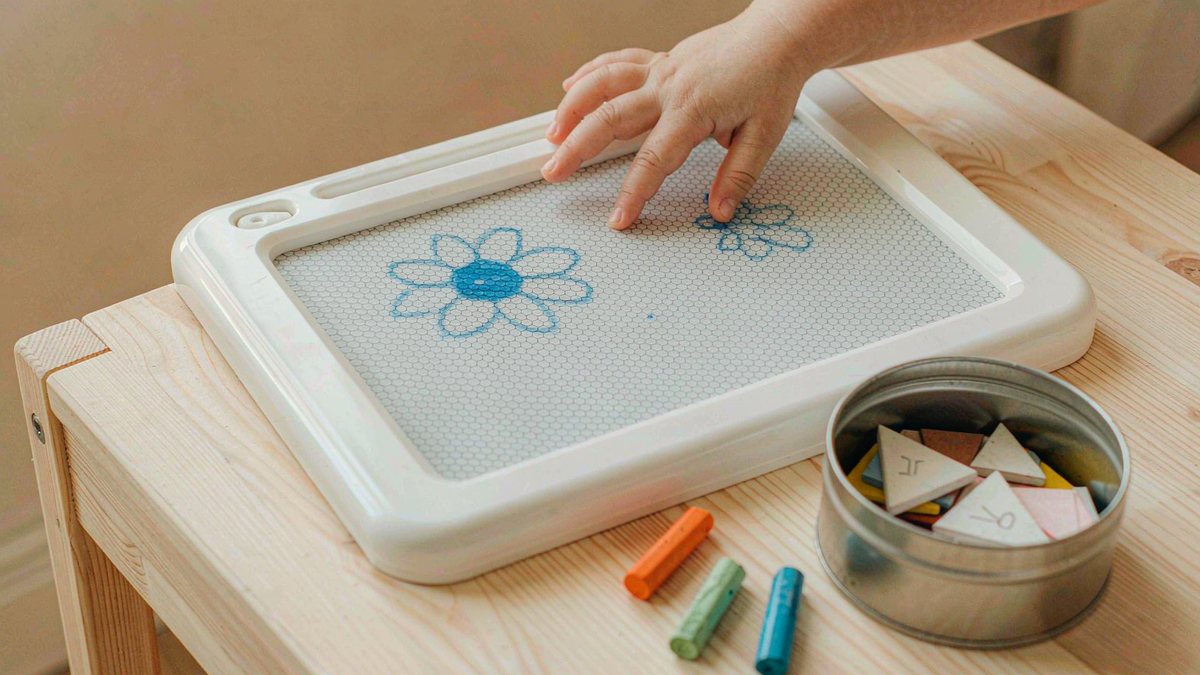
Magnetic drawing board
Best for travel
A tin of pattern blocks
Best for wind-down
Weighted lap pad or sensory sack
Best for older kids
A proper yo-yo or juggling set
How long we tested
Two months
8.8/ 10★★★★★Editor score
Our verdict
The winners were tactile, repetitive and slightly open-ended. Anything that needed an adult to start it lost.
Best forParents trying to reduce screen time without a fight
Budget$10-80
Screen-free is not a moral position, it is a design brief. A toy only competes with a tablet if it is immediately satisfying, endlessly repeatable and does not require an adult to set up. Most wooden toys fail the third test.
We removed batteries from twelve toys and watched what happened over two months in three households. What survived was tactile, quiet and slightly repetitive, which turns out to be exactly what children want after school.
How we chose
We scored on self-starting, repeatability and how long the toy held attention without an adult narrating.
Could the child start playing within ten seconds of picking it up?
Did it work the same way on the tenth session as the first?
Was it quiet enough for a car or a waiting room?
Did it need consumables that run out?
What makes a toy compete with a screen
Immediate feedback
A magnetic board, a yo-yo, a set of pattern blocks: all of them respond instantly to a small hand movement. That instant response is what a screen provides, so a good screen-free toy has to provide it too.
Repetition without boredom
The best toys are slightly hypnotic. Drawing and erasing, stacking and knocking down, looping a string. Repetition is not a failure state for children; it is the point.
No adult required
If the toy needs a parent to open a tin, find a piece or explain a rule every time, it becomes a treat rather than a habit. Buy things that live on a shelf and come out without help.
The bottom line
A magnetic drawing board is the highest-value screen-free gift you can buy: it costs about fifteen dollars, works from eighteen months to seven years, and never runs out. Add a tin of pattern blocks for travel and a sensory sack for wind-down, and you have covered most of the moments when a screen is the default.
Tested picks
What we would actually buy
01Best overall
Magnetic drawing board with stamp pens
$14-22
★★★★★9.2/10
Draw, stamp, slide to erase, repeat. The most-used object in every household we tested.
Only if they are more convenient than the screen. Keep them where the child already sits, not in a cupboard, and make sure they can be picked up without an adult.
What age should I start?
From around eighteen months, with large, safe, non-choking pieces. Magnetic boards and chunky blocks work earliest.
Are wooden toys always better?
No. Material matters less than play value. A plastic marble run gets used more than a wooden stacking rainbow in most homes.
GoKugo is reader-supported. We may earn a commission from links on this page. Read our disclosure.
The Sunday Shortlist
Six gift picks, one email a week.
No sponsored placements, no padded lists. Unsubscribe in one click.